The Hidden Force Behind Everything You Feel: Understanding Your Nervous System
Your nervous system is one of the most incredible survival systems ever created.
It is constantly scanning, interpreting, responding, protecting, adapting, and learning... often before you are even consciously aware of it.
Every racing heartbeat.
Every deep sigh.
Every moment of calm.
Every instant of panic, freeze, shutdown, excitement, connection, or overwhelm.
Your nervous system is involved in all of it.
And yet most people go through life without ever really understanding how it works.
So… What Is the Nervous System?
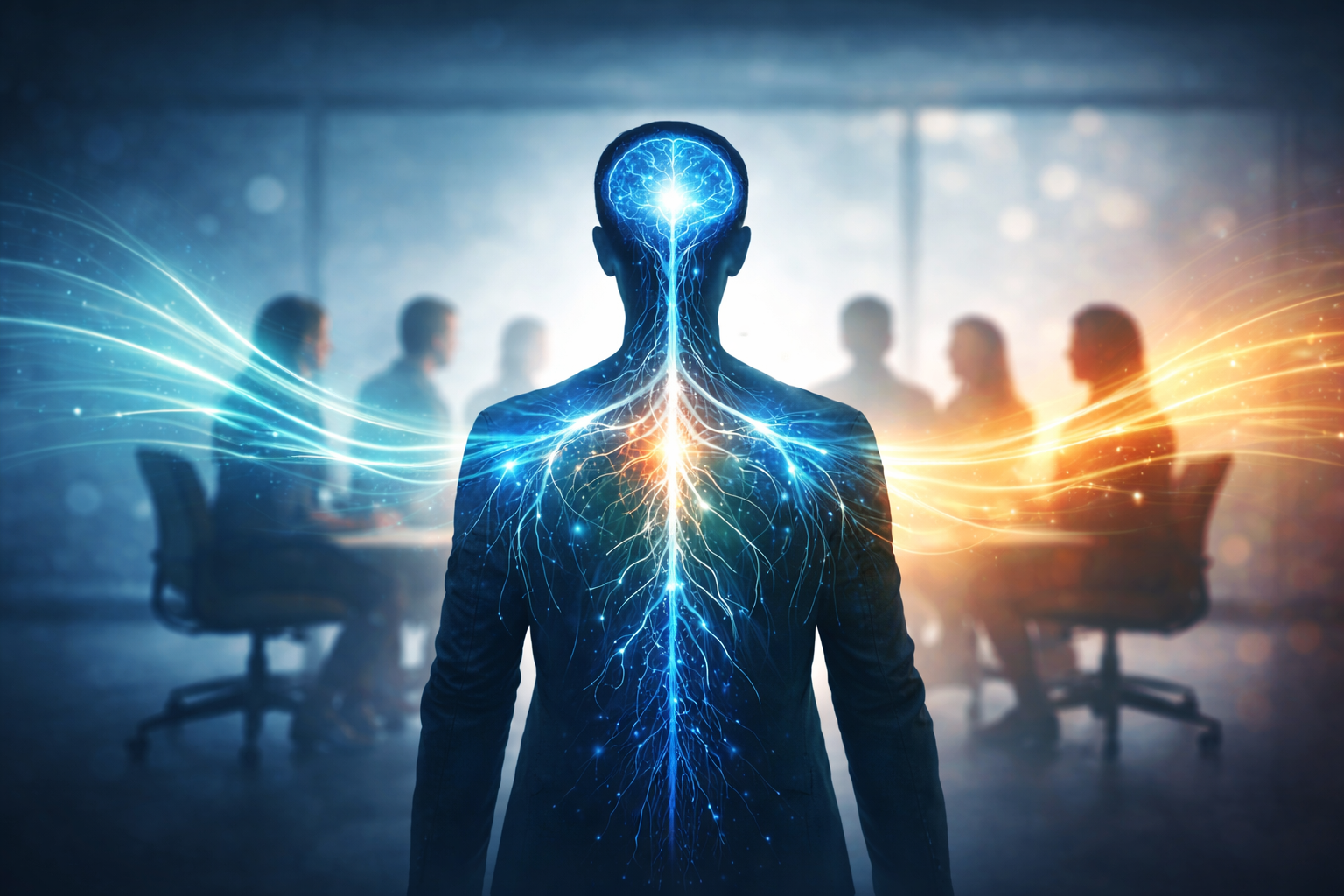
Think of your nervous system as your body’s communication and protection network.
It gathers information from;
- your environment,
- your thoughts,
- your memories,
- your relationships,
- your physical body,
…and then decides:
“Am I safe right now?”
That question sits underneath almost everything.
Not just physical safety.
Emotional safety too.
Belonging.
Connection.
Predictability.
Trust.
Control.
Acceptance.
Your nervous system is continuously interpreting the world through this lens.
Your Nervous System Has Different States
Many people think emotions simply “happen.”
But often what we are experiencing are nervous system states.
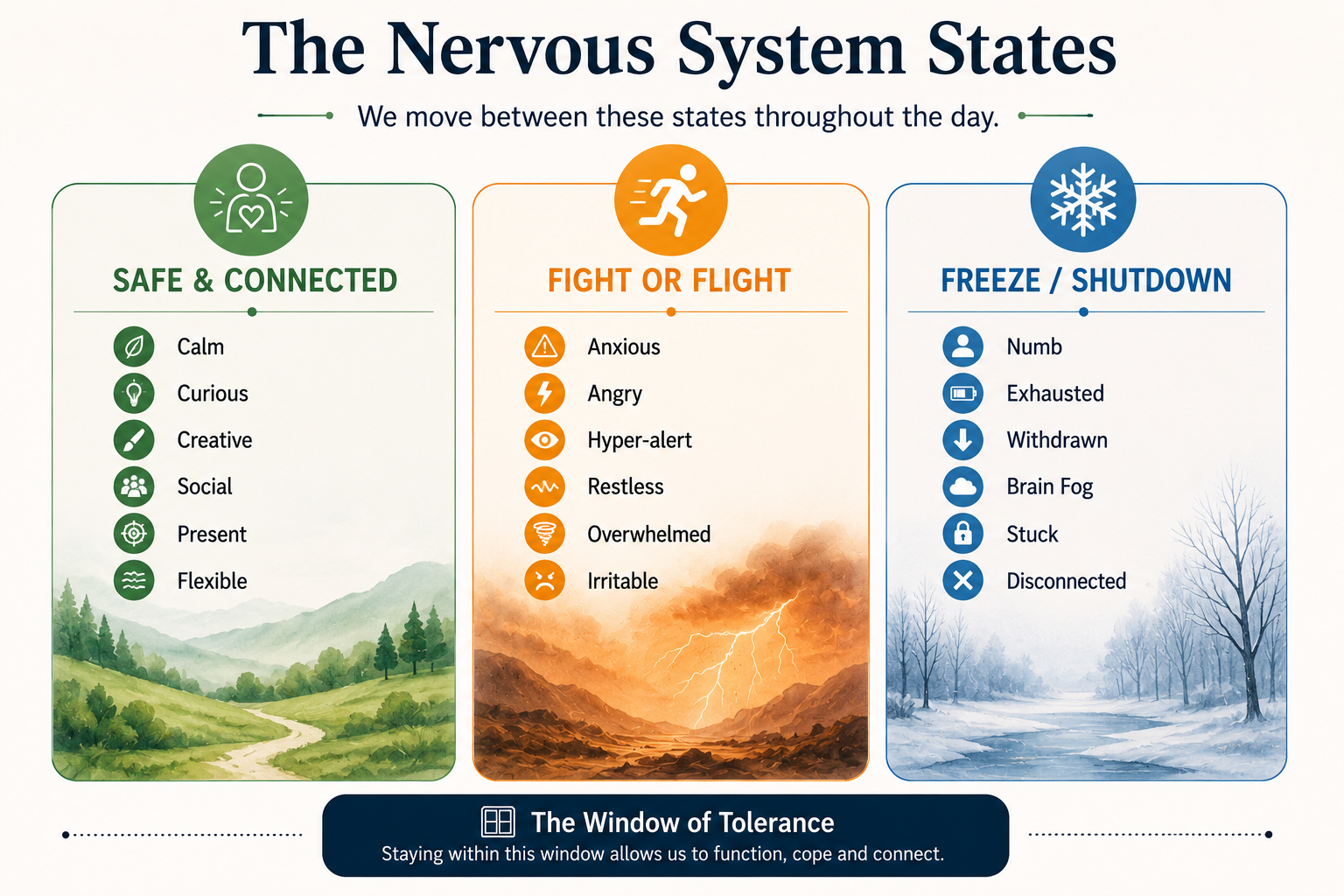
Safe & Connected
When the nervous system feels safe, we can:
- think clearly,
- connect with others,
- learn,
- problem solve,
- laugh,
- rest,
- be creative,
- regulate emotions more effectively.
This is the state where humans thrive.
You may notice:
- slower breathing,
- relaxed muscles,
- curiosity,
- warmth,
- emotional flexibility,
- feeling present.
Fight or Flight
When the nervous system senses danger, it activates survival energy.
This is the famous stress response.
Your body prepares you to:
- fight,
- escape,
- protect yourself,
- survive.
You might notice:
- racing thoughts,
- faster heartbeat,
- shallow breathing,
- irritability,
- anxiety,
- panic,
- restlessness,
- hypervigilance.
This system is incredibly useful if you are facing immediate danger.
The challenge is that modern humans often experience this activation constantly:
- emails,
- conflict,
- pressure,
- financial stress,
- social media,
- uncertainty,
- overwhelm.
The nervous system often responds to emotional threat similarly to physical threat.
Freeze or Shutdown
Sometimes survival is not about fighting or escaping.
Sometimes the nervous system decides:
“Nothing is working. Conserve energy.”
This can look like:
- numbness,
- exhaustion,
- disconnection,
- brain fog,
- collapse,
- feeling “stuck,”
- withdrawing from people,
- low motivation.
Many people mistake this state for laziness.
It is not laziness.
It is often a protective nervous system response.
While these states can seem separate, the reality is we move between them throughout the day. Our nervous system is constantly responding to our sense of safety and connection.
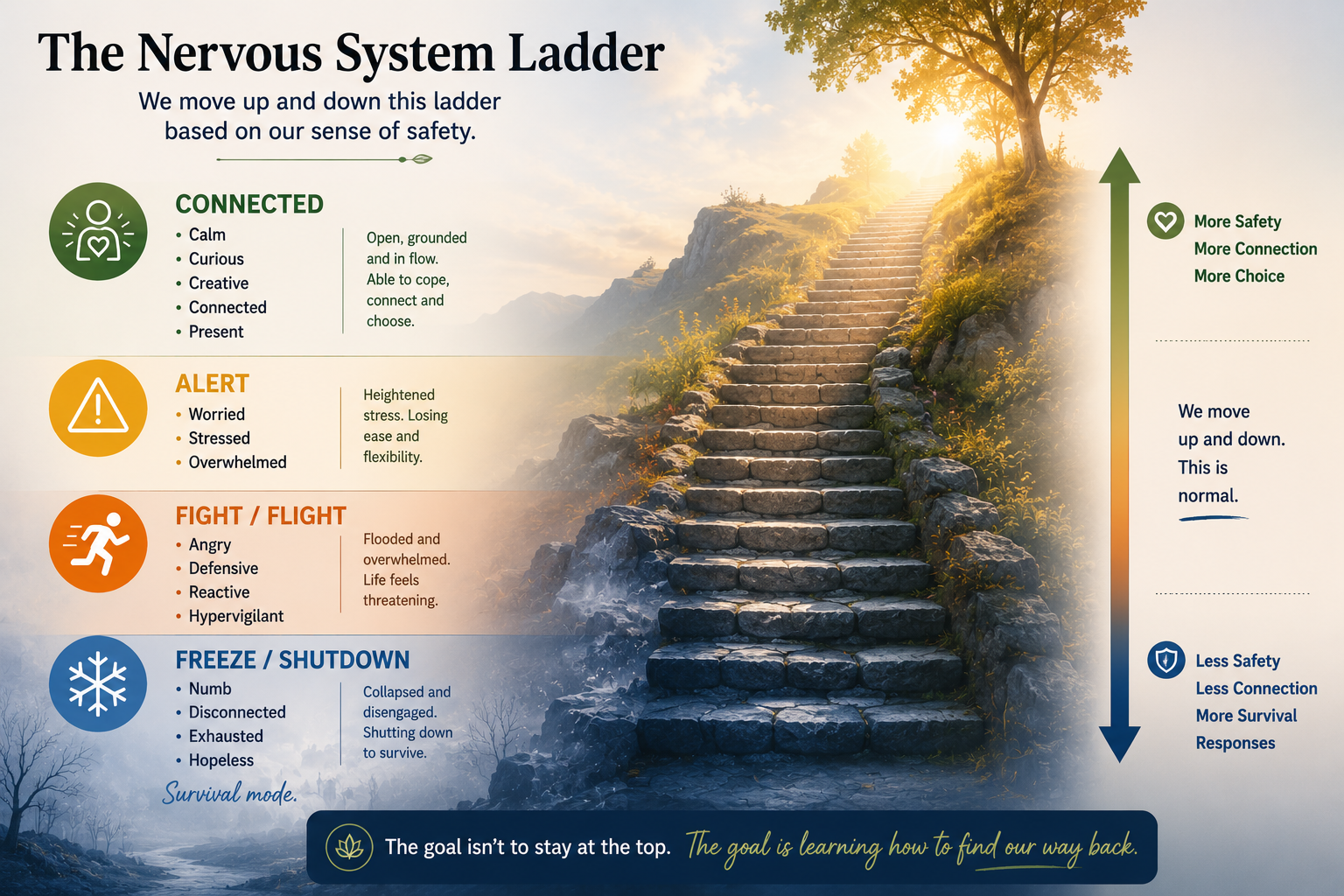
Your Nervous System Learns Through Experience
One of the most important things to understand is this:
Your nervous system is shaped by experience.
If someone grows up in unpredictability, criticism, conflict, fear, or emotional instability, their nervous system may become highly sensitive to danger.
Not because they are weak.
Because their nervous system adapted.
The nervous system is constantly asking:
- What should I expect?
- What keeps me safe?
- What do I need to prepare for?
This is why past experiences can continue to affect present reactions.
This is because our nervous system learns from experience. Over time, it builds patterns based on what has felt safe, unsafe, predictable, or threatening.
The behaviours we see on the surface, such as anger, withdrawal, perfectionism, or avoidance, are often driven by something deeper. What looks like a reaction today may actually be a nervous system trying to protect us based on past experiences.
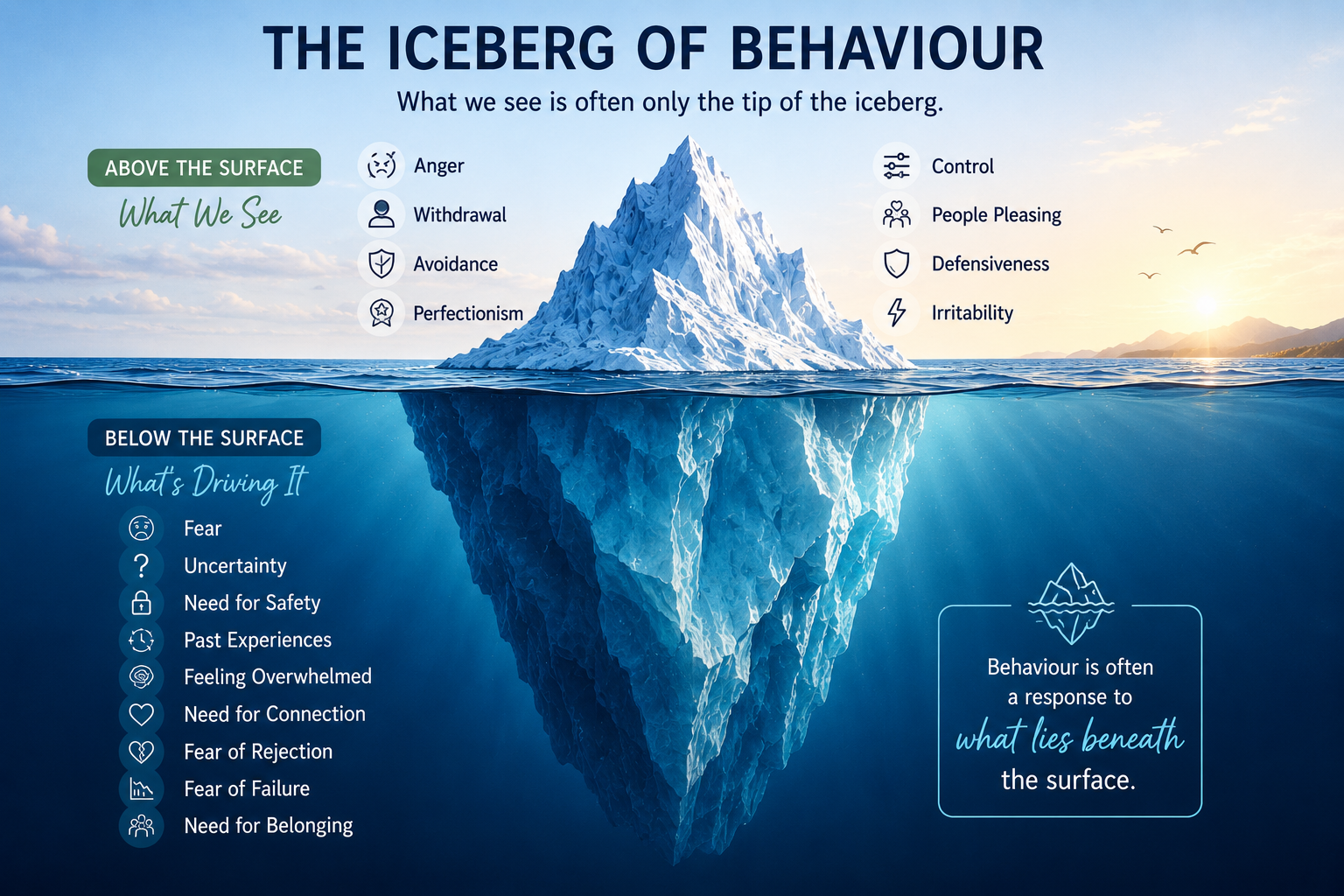
A small situation today may activate an old survival pattern from years ago. This is why understanding what's beneath the surface matters.
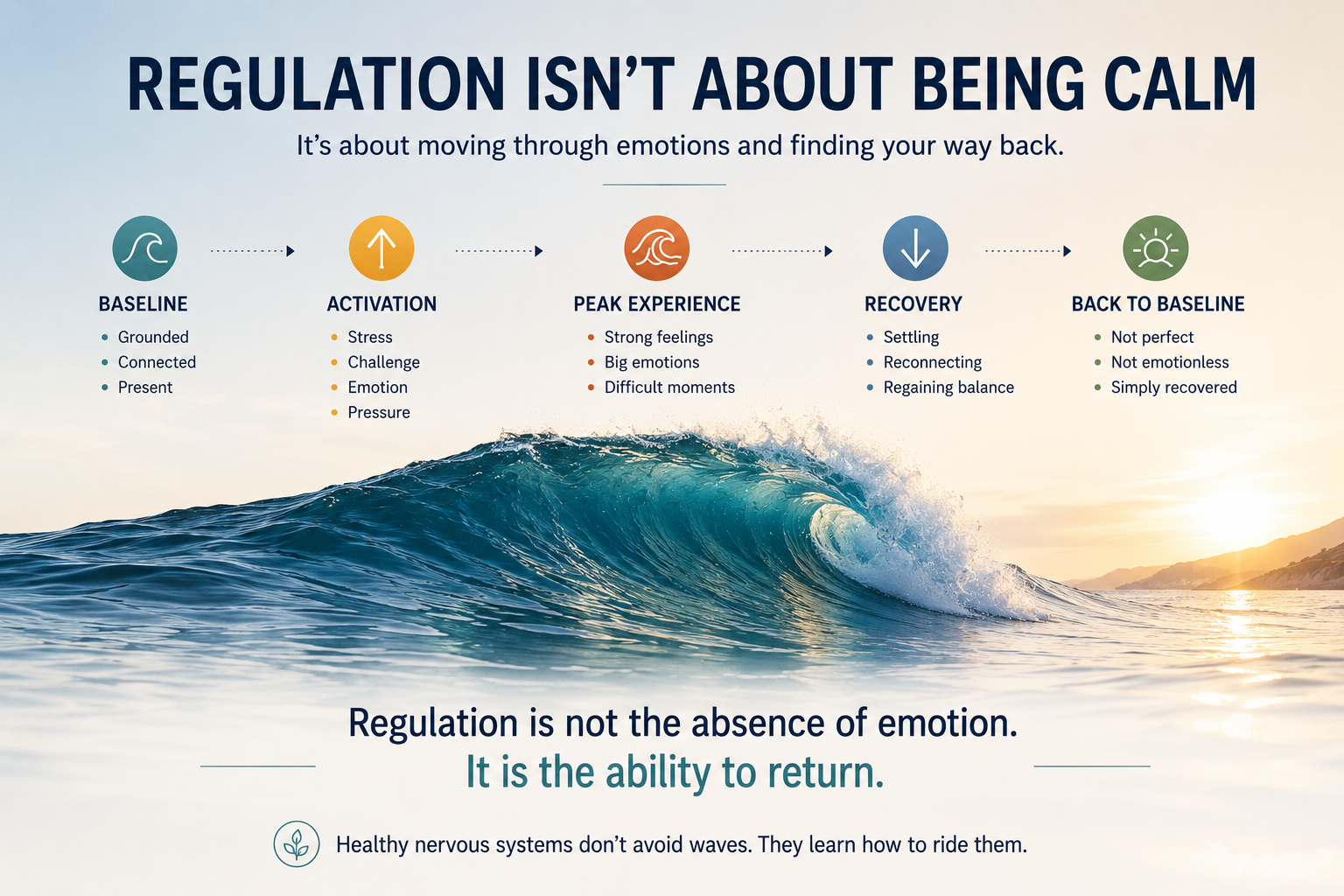
Regulation Is Not “Being Calm All the Time”
This is a huge misconception.
A regulated nervous system is not a perfectly peaceful nervous system.
Humans are designed to move through different states.
Regulation is actually about:
- flexibility,
- recovery,
- awareness,
- adaptability.
Regulation isn't about avoiding stress, sadness, frustration, or challenge. Human emotions naturally rise and fall. The goal is not to stop the waves... it's to learn how to navigate them and find our way back.
Co-Regulation: Humans Calm Humans
One of the most powerful things in nervous system science is this:
Humans regulate each other.
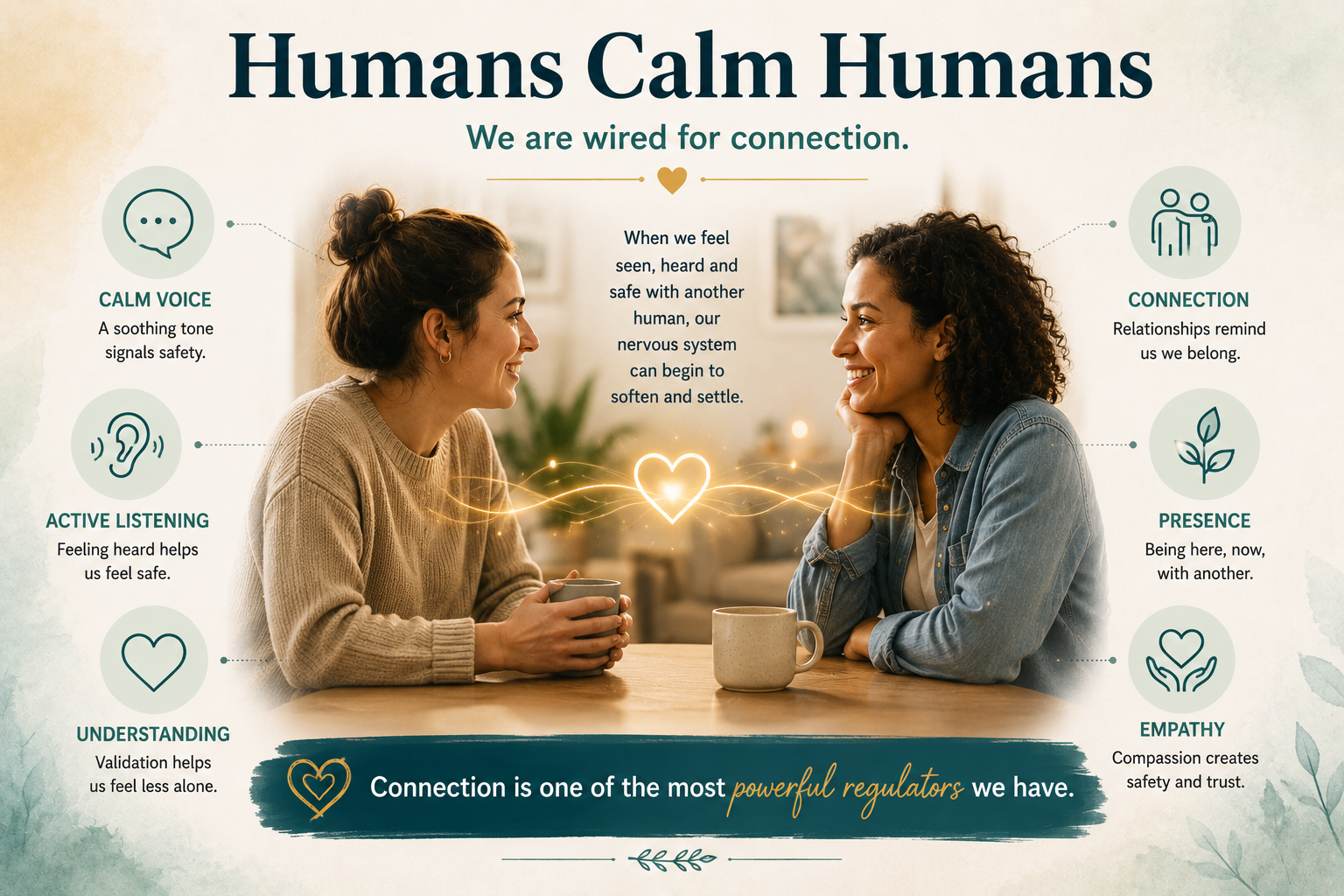
A calm voice.
A safe relationship.
Feeling understood.
A reassuring presence.
Someone listening without judgement.
These experiences literally affect the nervous system.
This is why connection matters so deeply.
And why isolation can feel so difficult for humans.
We are biologically wired for co-regulation.
The Nervous System Loves Predictability
Routines, sleep, nourishment, movement, connection, and safety cues all help the nervous system feel more secure.
This does not mean life becomes stress-free.
It means the nervous system has more capacity to handle stress.
Small things matter more than people realise:
- slowing your breathing,
- getting outside,
- laughter,
- hydration,
- sleep,
- safe people,
- movement,
- rest,
- music,
- moments of stillness.
These are not “small” to the nervous system.
They are biological signals.
Another way we can support our nervous system is by focusing our attention and energy on what we can control or actually influence.
Stress often increases when we become caught up in things we cannot control... other people's actions, future uncertainties, or events beyond our influence. While these concerns are understandable, our nervous system tends to feel safer when we direct our energy towards the things we can do, choose, and influence.
The Circle of Control is a simple but powerful tool that helps us identify where our energy is best spent.
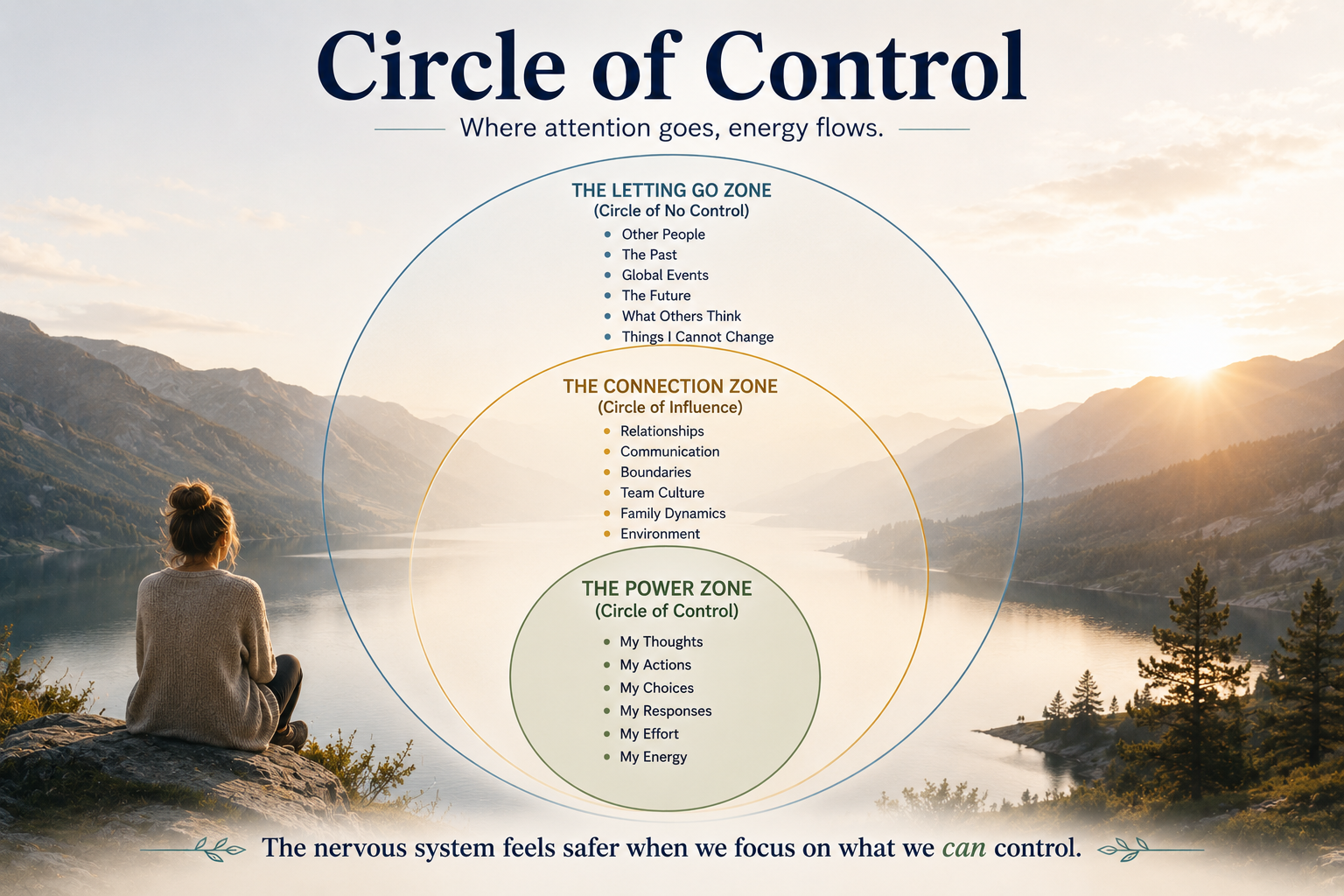
While we can't control everything that happens around us, we can influence many of the things that help our nervous system feel safer and more supported.
Why Understanding the Nervous System Changes Everything
When people understand the nervous system, something powerful often happens:
They stop seeing themselves as “too much,” “weak,” “lazy,” or “broken.”
Instead, they begin asking:
“What is my nervous system trying to do for me right now?”
That question creates compassion.
Because underneath many behaviours is protection.
Not failure.
Protection.
A Different Way to Understand Yourself
Your nervous system is not the enemy.
Even when it feels overwhelming.
Even when anxiety is loud.
Even when shutdown takes over.
Even when emotions feel messy.
Your nervous system is constantly trying to keep you alive, safe, connected, and functioning in the best way it knows how.
The goal is not to never feel stress.
The goal is to build awareness, safety, flexibility, support, and recovery.
To understand the signals instead of fighting them.
Because when we understand our nervous system, we often understand ourselves a little better too.