Why the Best Leaders Start With Their Nervous System
Your team feels your state before they hear your words. Most leaders are trained to manage people, projects, and performance, but very few are taught how to manage the one system that shapes every interaction they have: their own nervous system.

The state you bring into a room silently sets the tone before you say a single word. If leadership is influence, then your nervous system is your most powerful and overlooked leadership tool.
When we think about leadership, we often focus on strategy, decision-making, or communication skills. But effective leadership starts deeper. Understanding and regulating your nervous system can transform not just how you lead, but how your team performs, reacts, and thrives.
Your Nervous System Leads Before You Do
Every interaction you have begins long before your words land. Your posture, breathing, heart rate, and even the subtle tension in your jaw all communicate messages to your team. Humans are wired to co-regulate, meaning we unconsciously mirror the nervous states of those around us.
A leader in a hyperaroused state... stressed, rushed, or reactive, sets the room on edge. Conversely, a regulated leader calms the room, creates psychological safety, and sets the stage for clarity and creativity.
Your nervous system is often the first impression your team experiences - and the one they remember most.
The Three States of Leadership Presence
There are three core nervous system states that shape how leaders show up:
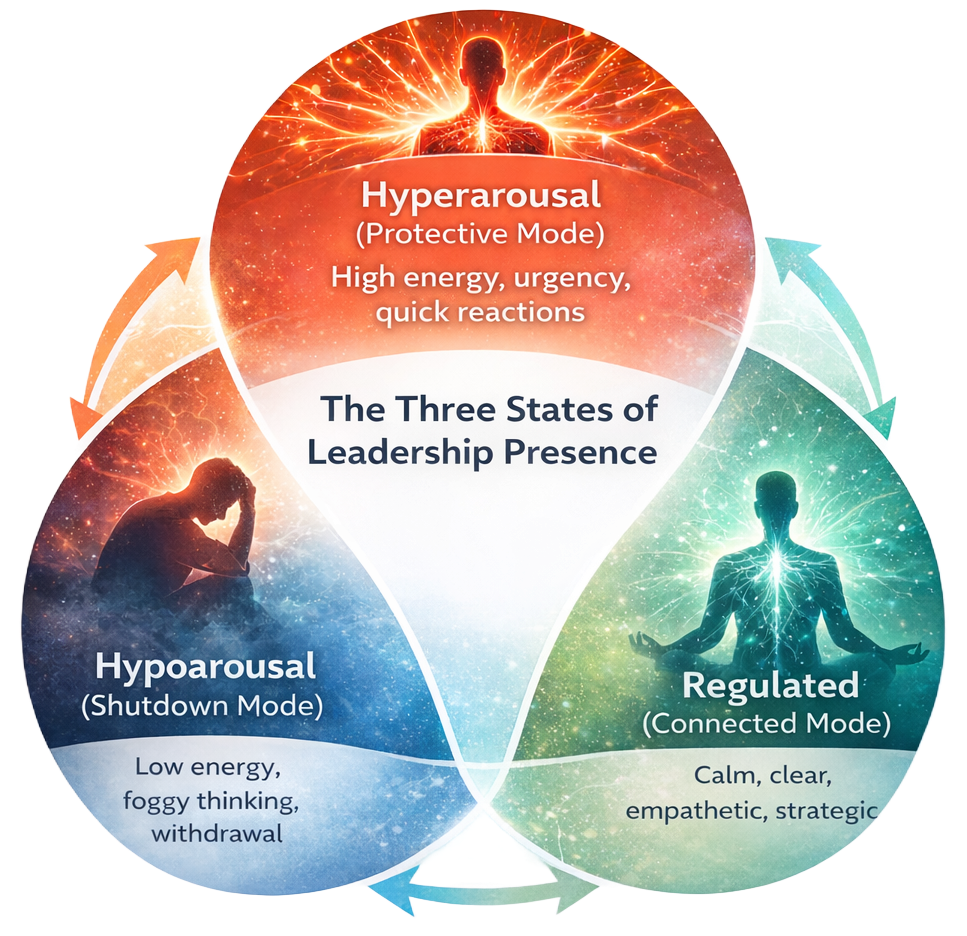
- Hyperarousal (Protective Mode): High energy, urgency, quick reactions - useful for action but poor for strategic thinking.
- Hypoarousal (Shutdown Mode): Low energy, foggy thinking, withdrawal - a common response to overwhelm.
- Regulated (Connected Mode): Calm, clear, empathetic, and strategic - the leadership sweet spot.
These states are not personality traits. They are physiological conditions that can be observed, adjusted, and regulated.
Triggers, Tells, and Self-Mastery
Every leader has unique triggers that push them up or down the nervous system ladder. Your “tells” (eg. jaw tension, quick speech, irritability, or mental fog) are signals to pause and reset.
When you recognise your triggers and tells, you gain choice. You can respond intentionally rather than reacting automatically. This is the difference between leadership that drains you and leadership that energises and inspires your team.
Advanced Regulation Tools for Leaders
Practical tools can help you regain regulation quickly:
- Vagal anchors: Physical cues like grounding your feet or placing a hand on your sternum to activate calm.
- Cognitive reshape: Brief questions that interrupt your stress story - for example, “Is this urgent, or just loud?”
- Co-regulation leadership: Using your tone, posture, and breathing to help steady your team’s emotional state.
These are not soft wellness techniques. They are high-impact leadership strategies that strengthen decision-making, empathy, and influence.
Boundaries as a Regulation Strategy
Many leaders struggle with boundaries because their nervous system is overloaded. People-pleasing, over-responsibility, and conflict avoidance are often survival responses rather than character flaws.
Healthy boundaries can be expressed in three ways:
- Soft boundary - connection first
- Firm boundary - clarity first
- Energetic boundary - choosing what you do not absorb
When leaders regulate themselves first, boundaries feel steady, calm, and sustainable.
Regulated Conversations and Culture Design
The order of leadership matters:
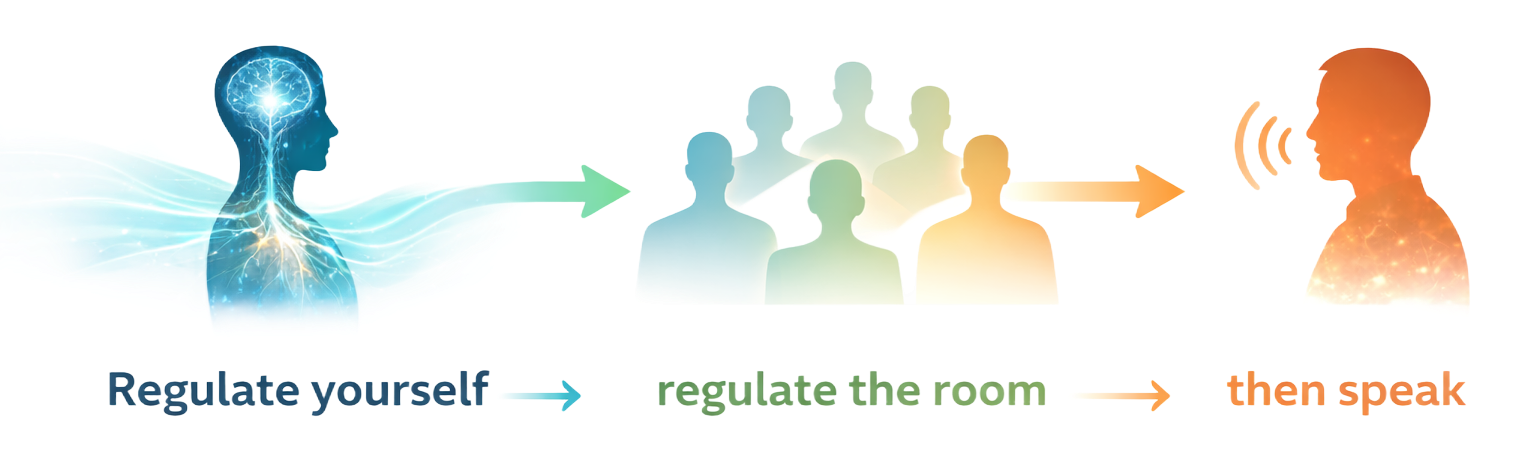
When leaders follow this sequence, difficult conversations land more effectively, teams feel safer, and culture shifts. Regulation creates workplaces where clarity increases, conflict decreases, and psychological safety becomes the norm.
Your State Is Your Leadership
Leadership is not about doing more. It is about showing up wisely.
Your calm, clarity, and boundaries ripple outward, shaping your team and organisation long before your words do. Mastery comes from understanding your nervous system, noticing your triggers, and applying simple, practical tools to lead from regulation rather than reactivity.
When your nervous system is regulated, everything else aligns more easily.
Trust the impact of your presence.